Jeffrey Greenberg
Builder of Products & Platforms.
An innovative technology leader with an artful sensibility.

Builder of Products & Platforms.
An innovative technology leader with an artful sensibility.
I'm a bit of the mad-genius type with NEA grants (yes, that's experimental art) as well as UNIX internals, distributed operating systems, medical imaging patents, and networking stacks. I've explored many roles rather than an "ever-growing responsibility" career narrative. So I've gone from deep technology consulting, to being the CIO managing 225+ people and 3.5bn revenue, and then on to being a startup leader writing code for a sentiment analysis AI. (Turns out being a CEO is not the best fit for me.)
I've innovated products and technologies, and delivered them in a variety of markets. These innovations have been patented and recognized by journals and industry leaders.
My interests are in products that do good, primarily related to Medical technology and problems in Social technology. My skills are in product and technology innovation, as well as, leadership and product delivery.
I'm looking to run teams creating, delivering, and operating great services related to medicine, healthcare, or space and probably involving Deep Learning and Big Data. These might have the title of CTO, or VP or Director of Engineering.
PeerWell helps patient's prepare and recover from major medical events. Pioneering the concept of 'prehab', PeerWell provides patients with daily information, and obtains direct measurements of their physical condition, and coaches patients to improve their condition. We use a combination of image recognition AI, sensor data, as well as reactive content to help patients on an individual basis. I oversee product and product development with a local and outsourced team. I too am a contributor. We are rapidly becoming the standard for patient support of muscolo-skeletal surgery in the US, providing real-time insight to nursing staff as to immediate status of patients in their pre- and post-surgery journey.
I personally invented a unique way to measure range-of-motion of the knee, and elaborations for shoulder, as well as, an AI approach to helping patient identify trip-and-fall hazards in the home.
This small consultancy takes on difficult business technology problems ranging from product management, to process improvement, to the technology itself. I advise startups to mid-size global companies. At times I am able to draw on the talents of a variety of partner CTOs with some spectacular backgrounds including: the former CTO of DoubleClick, the builder of the Lunar Orbital Camera (orbiting and photographing the moon right now), and the Founder of Petstore.com.
Notable Clients & Accomplishments:
Liberty Travel is one the nation’s largest purveyors of packaged travel. As the CIO, I managed a staff of more than 200 and a budget of $50MM in a two-year consulting assignment with the goals of improving key IT products and services and optimizing the companies core technologies as part of the a plan to sell the company. This company not only serves 3000 internal travel agents in store fronts, but provides full online services to the thousands of independent travel agencies. On top of that, it runs the core travel technology for American Airlines Vacation Travel.
An innovative education startup for which I provided technology strategy budgets to the CEO, participated in VC presentations, and hired, architected, and built the initial product. Technically, this was one of the early one page Javascript apps.
This early social media metrics and tracking service (2009) that founded and built focuses on providing brand data to marketing and PR agencies. I architected and managed the development of, and help code the system including the custom sentiment analysis engine using machine learning techniques, and a scalable backend on AWS. This privately held business became fully automated and is now self-running and continues to provide competitive value in the Twitter analytics space. As founder, I oversaw all aspects, hired resources, and oversaw and contributed to developement. Acquired.
Founder, Lines -- Puzzle Game. (2013-present), a charming, free-to-play puzzle game that combines my interest in technology, aesthetics, and fun. Built with the latest technology and with practices including extensive metrics, usability studies, and Node.js/Javascript/HTML, the game is currently soft-launched in New Zealand and Australia (in the Apple AppStore) on it’s way to the US and world-wide. The app and system is written entirely by myself and bemefits from a variety of designers, game ux consulants, and other services.
Engineering Manager, Project Manager, and Researcher in medical diagnostic ultrasound
Engineering Manager, Systems Architecture (as an Independent Contractor):
Invented one of the first full, drag-and-drop, iconic interface for Windows:
Unix Internals architecture, Technical Lead, Manager:
I am an active artist working in art & technology, with a history of work in performance art and non-audience art. With the non-profit 501(c)3 corporation, Performance Project, which I created, I published a journal on performance art distributed internationally, and ran a weekly situation for artists to present their work and receive critical feedback. Performance Project met regularly at such distinguished places as PS122, LA MAMA, and Franklin Furnace.
Publications, Teaching, Authorship
Served as CIO
Libgo, a holding company for Liberty Travel and GoGo Worldwide Vacations in the increasingly competitive travel industry, approached us to solve what appeared to be a problem created by a long series of missteps by previous consultants.”
Both Liberty Travel, the inventor of the “travel package,” and GoGo Vacations, a wholesaler of leisure vacations, are widely recognized as industry leaders in their segments. As a result, both have valuable brands which require scalable technology to handle, in the case of Liberty Travel, 200 locations in 25 states with 3000 agents, and, in the case of GoGo Vacations, agents from more than 18,000 agencies.
GoGo Vacations provides private-label vacations for four major airlines, including all the packages and technology for American Airlines Vacations.
Libgo had committed to improving its systems even as new competitors, entirely web-based, put up sites designed to lessen the importance of human contact and travel agents in the industry. The Libgo directive was to build a state-of-art system that would be acknowledged as industry-leading for direct selling to consumers, to support travel agents and to provide technology and other travel products to third parties.
An enormous undertaking--one that over several years and with expenditures in the tens of millions of dollars--had initial successes in moving to a modern ERP solution, but the overall program was taking too long and had gone over budget.
The executive team brought Inventivity on board to get the project back on track.
Cathy Peleaz, President of Liberty Travel, said, “The Inventivity team provided our executives with feedback that was unbiased and refreshingly candid. Their recommendations and clear action plan gave us the strategic vision we needed to bring the project back on track and realize successes.”
Our Inventivity team took on the role of de facto CIO and CTO, with responsibility for a $40 million annual budget and 200 staff members. In short order, Inventivity revamped technology strategy, renegotiated contracts, purchased code and put the company back in charge of its own systems and processes destiny.
We were not ‘travel experts,’ but we knew that this was a ‘partnership-driven’ industry, so we enlisted customers as well as the Liberty teams' knowledge and identified the highest value features and we went to work on them immediately.
Inventivity’s team improved IT morale by supporting the folks in the trenches and hired senior IT staff to provide leadership. The result was refocused and simplified processes, improved processes and the creation of a realistic path aimed at value creation for the department.
Consulted on Engineering process improvement
Working with high profile, market leaders requires both technical excellence and a thorough understanding of the need to provide absolutely seamless transitions and software. So, when we were approached by Sonic Solutions, the leader in digital media software, we took on the project with the full understanding of what was at risk. And as often happens, what we initially set out to do was overshadowed by the exigencies of the assignment.
We were called in to perform Linux consulting services, but we quickly concluded that we needed to provide a solution that would help both Sonic and its client, Sony. Sonic had tasked a recent acquisition with providing DVD and other key technology to Sony’s premier DVR product line. During our initial discussions we observed that project management and process within Sonic made this delivery much more difficult and that Sony’s timelines were unrealistic.
After bootstrapping a port of Sonics’ Windows-based source code to Linux, we worked with the VP of Engineering to improve project management to ensure the project’s overall success. The Inventivity team successfully delivered to Sony, which led to additional efforts and an engagement with Hitachi and other consumer electronics vendors for Sonic.
Sonic then turned to us for additional projects and process improvements. Within 60 days we had achieved positive ROI for the efforts. During this time, Sonic experienced rapid growth and has since successfully delivered technology to the likes of Microsoft, Sony, Hitachi, Dell and others.
Sonic also enlisted the Inventivity team for its entry into the embedded system space, providing leadership in product and project management. Inventivity managed the production of the strategic program plan involving the VPs of Marketing, Engineering, Advanced Technology and the CTO. The team launched the first series of projects including staffing the team, managing the project, establishing an outsourcer selection process and hiring and managing the outsourcer.
Later, Sonic asked Inventivity to participate in M&A due diligence of acquisitions by evaluating target teams and their processes, and providing recommendations for smoothly integrating them within Sonic.
Founded & served as Principal Consultant
Inventivity was born out of a variety of needs: finding a way to work on creative assignments and leading work, working on strategic problems that mix technology, management and business, wanting to work with great people to build a self-sustaining community that could help each other and build long-term relationships with customers and co-workers. I’d built a startup in NYC and a small services business, too, but Silicon Valley has a much deeper pool of talent and backgrounds in technology.
Inventivity became a formal way to sell my services, but with some elements that would make it more sustainable for me and my consulting peers. It allowed for a combination of minimal risk by taking cash as payment, but also a longer term investment by payment through equity. It’s a way to participate on the upside and take a deeper engagement with the company, more in harmony with the aims of the senior management and employees. This means that we often come in at odds with large consulting firms, as we’re not incented to sell bodies, but we’re after the greater good of company and its workforce.
We come in selling metrics, processes, and efficiency, on top of deep expertise in software, architecture and systems, and the experiences of founding and running and helping many product oriented companies. So we understand the urgency of innovative and effective product development, and what it takes for robust, high quality and cost-effective systems management. We understand what employees are challenged with and how to help them do it, and get on the line with them as need be to fill gaps.
Over the last six years, this model has allowed us to take on assignments ranging from fresh projects to having to come in and stop hemorrhaging caused by unsuccessful internal programs or, worse yet, having to clean up where previous consultants have recommended the wrong courses of action. It’s the cases where we have found and illuminated the possibilities for improvement, that are the most exciting. When the client really gets the direction and takes it over and owns it. That’s the best.
Consulted as Primary System Architect
Immediately after the breakup of the Bell System (AT&T), seven regional telecommunications companies were formed, with Verizon becoming the entity that provided service in the northeastern U.S. NYNEX and NYNEX Science and Technology were the subsidiaries of Verizon charged with the responsibility for providing all the telecom services (business and residential) in the region.
I put together and directed the team that architected all the work stations and infrastructure for residential telephone service in the northeast U.S. The task here was to integrate several former local Bell Operating Companies with enormous customer bases in a seamless transition. We successfully managed the core software teams while improving connectivity and efficiencies under intense media, regulatory and public scrutiny.
Consulting CTO
Hewitt is a global HR consulting company that also provides HR oursourcing to Fortune 50 companies. Millions of employees rely on Hewitt’s systems to manage their health and insurance benefits. The company also provides HR information such as the Fortune’s 100 best companies to work for.
Inventivity was engaged,through Scient, a leading e-business consultancy, to participate in the inception of a new business starting from early business strategy discussions to development of the first implementation.
The new business required serving up to 20 million users employed by hundreds of companies near the end of the year when they all need to enroll in health plans and thus the system would need to tolerate enormous peak usage.
To do this, Inventivity assessed Hewitt’s already substantial technology organization (1700 people) and systems in order to develop a technology strategy that could meet these requirements. “It turned out they had substantial expertise in building and operating large-scale systems, however, they lacked the knowledge and the culture to build a second system, web-based and serving the general public in a short time,” said Jeffrey Greenberg.
“We provided deep technical experience and organized and led very talented architects to design and size a system that could meet their needs” he said. Working with business thought leaders and project management staff, Inventivity created an organization to design the web-system and the staff to build it. The Inventivity team was able to mediate between the client and a large consultancy hired to implement a vision.
On this assignment, both a new system and technology organization were built from scratch. To do this, Inventivity served as the virtual CTO of the organization.
“We gained credibility with the client and the development outsource team because we clearly outlined the challenges they would be facing and helped them to arrive at realistic dates and scope,” said Greenberg. With an overall team size of about 120 people and a development organization of 80, the internal organizational challenges were also intense. “We acted as a neutral third party, at once mediating and leading a hungry client with very high standards and a driving but young outsourcing team.”
Technology due diligence
Investor Growth Capital was interested in investing in a late-stage telecommunications startup focused on helping large-scale businesses reduce their telecommunications costs through innovations in usage tracking and contract negotiations with telecomunications carriers like AT&T. IGC is an independent venture capital firm specializing in expansion-stage investments in technology and healthcare. With more than $3 billion invested in 250+ companies worldwide, the 17-year old company is focused building value over time. Noah Walley, a Managing Director, at the firm reached out to Mr. Greenberg to perform technical due diligence as part of their business assessment.
Inventivity's Jeffrey Greenberg joined the business due diligence team at the client location and quickly probed all aspects of the product technology: it’s staff, operations, processes in a two-day technical assessment. “Starting with the startup's presentations, we assessed the experience of the key leadership, the key development and operational processes, and risks in this technical product with a multi-year horizon. Our assessment of the product's short and long term risks, the potential for unexpected costs, and other key issues was translated for use by the investment team in evaluating whether to commit capital to this business”, said Mr. Greenberg.
Shortly after, IGC did invest, and the company did an IPO a on the Nasdaq exchange.
Consulting CTO
Melanie Cheng is a startup founder with a passion for local food, local farms, and healthy food. She had worked with an outsourcer to develop here innovative vision for improving the efficiencies of local food producers and food distribution. And she was facing some challenges with getting her vision accomplished. She contacted Inventivity's Jeffrey Greenberg to get help on assessing the development situation and what moves to make next. "It was a tense time in which a non-technical founder is trying to get their business in motion, and an outsourcer is trying to understand and execute on the vision. And sometimes the two don't connect so well. Melanie contacted us to provide some outside technical management eyes to the situation, and provide some options to keep things moving in the right direction".
We stepped in and helped her to move ahead with the situation, and helped her to focus on hiring a CTO to help her succeed with her vision. "It's always a pleasure to help startups that working so earnestly to do good, and we were able to help move her ahead".
I worked at Acuson Corp., maker of state-of-the-art diagnostic ultrasound and now a division of Siemens. As the team leader, I was instrumental in the product development, design and delivery of a Java-based medical application, dubbed WebPro. This system allowed physicians, for the first time, to review ultrasound examinations over the Internet. WebPro ultimately became an entire line of products for Acuson.
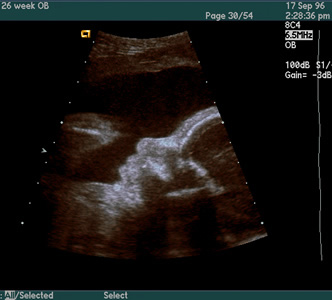
“With new internet applications such as [the] WebPro package, health care professionals can use Internet technology to make online medical assessments for patients 24 hours a day, delivering cost-effective ultrasound diagnosis anywhere the physician is located.”
— John Chambers, CEO Cisco
I also had the chance to do some unique research with voice and touch interfaces for improving medical workstation products, and research into reducing speckle on ultrasound images. I was awarded a sole patent US6514201 for this interface work, and a patent US6511426 as a co-inventor for the medical imaging enhancement work.
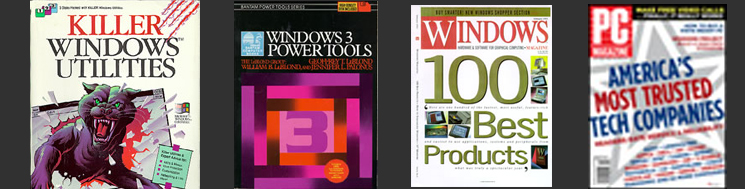
Early in my career, I was fortunate enough to have invented and commercialized one of the first “drag and drop” interfaces for Windows. Even before Microsoft itself was able to accomplish it. It was an entirely new product category in which many players followed.
Here’s what was said at the time:
“WinTools offers the most powerful tools for customizing the Windows desktop that PC Week Labs has tested…”
—PC Week
“A revolutionary revamping of the way Windows works and looks!
...You’ll love WinTools.”
—PC Magazine
“WinTools is the most gracefully graphical way to work in Windows…
Get Wintools. It’s great stuff.”
—Computer Shopper
“If you’re a Windows fanatic, you’ll love it…”
—From John Dvorak
In 1986, there was a drag & drop interface by IBM under OS/2, and there was an innovative drag & drop interface under SunOS, and the Xerox Star was out as well. And the Mac had an interface in which you could only drag a file onto the trash in order to delete it: that was all you could do. Someone ported this initial limited Mac interface Windows 2.0.
Aporia, my shareware product, was first released in 1987-1988 as version .03 and was the first first pure, drag & drop interface for Windows in which you drop any icon on any other in order to achieve an effect. Not just deleting, but copying icons, etc. The Microsoft Windows Program Manager was very very limited program launcher, and Microsoft provided means to replace it. I took advantage of the situation, as an early Windows developer, and hooked up with Michael Davis and started a business. Wintools was that product, and included early Window's adopters such as Chase Bank. Soon, other players came in including HP and Xerox. But with Windows '95, Microsoft decided the desktop was their playground and drove all of us out.
There’s a business lesson there, about the risks of playing on other's shirt-tails.
The archeology behind this is being developed HERE.
I helped design and implement large parts of the Auragen fault-tolerant operating system based on UNIX. From this early distributed and fault-tolerant system we learned many lessons that are relevant today: the advantages and challenges of using thousands of computers for large computing tasks and reliable operations. This paper was an important computer science paper with more than 300 citations. Our work there was important as one of the first pure software solutions to operating systems fault-tolerance through parallelism and loosely synchronized computers. The system competed with Tandem and Stratus's approaches, and was ultimately sold to Siemens.
I worked on implementing about 90% of UNIX system calls and implemented an early virtual memory paging implementation. It was also great experience for working close to the metal and having a very deep understanding of software and systems.
I worked closely with Anita Borg who later worked passionately on opportunities for women in technology.
Embracing Change and Innovation
I've ridden the transition of computing technology from an elite practice to it’s ubiquitous presence in everyday life. Long ago, sitting in a refrigerated computer room and staring at an 8.5x11 inch paper diagramming pretty much all the machines on the Internet, I said “Email is cool but there’s no one to send to!” Now, we’re worried about getting inundated with too many messages from everyone. While that marks my age, I want to point out is a few things, having witnessed (and to a degree facilitated) aspects of the profound technology transformation we’re in the midst of.
One is that I bring to the table deep experience with problem solving, having thrived when there were no wikis, few gurus, and little source code. Understanding problem complexity and technical challenges that range from operating systems, infrastructure design, and on up to applications and requirements, and evolution of work, project and organizational structure, on up to product, customer listening, and business direction... I've seen the whole stack evolve, helped innovate changes at every level in a quest to do things better, make life easier and richer.
Different Minds, Metrics and Value Creation
My background is in both computing (bioengineering in fact), and "advanced" art. I’ve got patents in computing related to bioengineering and a variety of awards for art work from such places as the National Endowment for the Arts. As a result, I’ve a healthy respect for the minds of all sorts, and at time can play with a variety of them. Managing diverse and multi-functional teams is something I enjoy immensely, whether it’s setting up Muslim prayer rooms or making sure the creatives are being heard by engineering, while offering an occasional thought about ad aesthetics.
I’m good at grasping the core of complex human processes and technology systems. I also tend to stay close to technology because that’s where my creativity is most strong and my credibility most valuable. Because I understand both the engineering (science) and the human processes I think that I can deal with the intangible parts of projects. I am very much a believer that strong engineering and product staff sometimes need to be given the space, support, and metrics to focus on creating value within their organizations. I’m a fan of agile processes, process improvement, and getting teams to buy into change rather than forcing it from the top.
I'm aware of the differences and interplay between engineering mind, operational mind, and creative's mind. I understand the perspectives and pressures of marketing and sales, and the essential need to put the customer ahead of everything else. The complex dynamics of an organization, the need to use the latest creative and organization experiments in order to improve, the pressures of business competition is a world I’m comfortable with.
I’ve been able to have a small consultancy for much of my career which has provided me with independence and the opportunity to see and learn from many different entrepreneurs, leaders and projects. Still when I’m consulting I see myself as part of the core management team, and my clients do so as well by involving me in their strategic efforts. When I finished a stint at Sonic Solutions we were literally applauded by the engineering organization – that’s pretty satisfying.
You can think of a project as a company artwork and my art background allows me to look at technology in a way that is both different and effective. You’ve got to know how to work the material: painting alone has a myriad of techniques let alone sculpture or performance, and you’ve also got all sorts of subtle motivations and psychological drama, along with the question of who your audience is and how they’re going to react.
Without belaboring the metaphor, for a technology “artwork” to be successful, if you will, the elements range from monetization to market segments to usability and include all sorts of techniques in requirements, design, engineering and operations. You’ve got the team psychology and the drama of all the players. And the effect you’re generally after is a deep satisfaction of all the players, who become your ambassadors with customers, clients, suppliers and other employees. This is a sort community value-chain, where each are seeking the other to fulfill needs.
Being a seasoned CTO means being intimately familiar with the nature of technology at large.
Technology moves quickly, and there are fads and cycles that come and go just as quickly. Each time around, there is something new, different and better... but you've seen many technology cycles before. You know that things will be better, but not perfect, and you've got the advantage of some insight into what is likely to succeed and to what extent, and what problems you're still going to face. If you know this from experience, as I do, you can approach technology proactively, rather than reactively.
I'm also someone who has lived on the edge of leading technology, and done research in it. That doesn't just mean that I have used the latest product. It's more than that. I deeply understand the technology and know where it’s headed and how to change it. I know what the problems are being worked on and where solutions are going to come from.
I've worked all over the software technology stack modifying operating systems, porting systems to new chips, pushing the edge on interfaces that we’re still learning about that use voice and touch, worked on AI-ish problems that are on the edge of what we know how to do with computers. What that means is that I’m not afraid to create a new solution to problem, such as a unique infrastruture solution that solves a key business or engineering problem. But I want to add that I’m not a fan of “not invented here” thinking, and believe that best practices for rapid development involve very significant use of open source, as well as leveraging the work and experiences of others.
I'm more than an alpha-geek in that I also bring some aesthetics, some art, some human engagement into what I'm making to more roundly fill out it’s usefulness, rather than just being something I can do just because I can.
Innovation is hard work. You have to think creatively and see connections; you have to know what is out there that makes them practical in a business timeframe and not just a research project. I love research, too. Research requires appropriate support and can lead to long-term business value. Each has a context, and I'm excited by both. I'm excited by pure knowledge and pushing the edge on what we can do, and I'm interested in how to create value with it. Both are fantastic ways of moving forward.
Technology essentially provides two things:Automation and Opportunity.
You can always find ways to run faster and cheaper with less. And as technology evolves and your business partners evolve, you can always find new opportunities that weren’t there before. But being able to integrate both becomes the key in creating value for a business. In one sense, the particular balance between the two comes from the business strategy.
Nevertheless, strategy has to be grounded in realistic deliverables and practical timeframes. The tactics live in everyday processes, in effective technology and in real people who work on this stuff. It has to be deep enough to respond to changes in competitive atmosphere and to be able to move with the opportunities the technology presents. If you have a good sense of where the technology is going, then you will be in the position to take advantage of it without having wasted time/money/effort in building something you’re going to throw out.
I believe:
• in metrics and the many social games that help us become effective
• in structured project management where appropriate (agile if possible), and fast and loose when it’s the right time for that
• in talking truth even when it’s inconvenient
• that everyone wants to make great products, and management’s job is to enable that, getting out of the way when possible
• that experience counts for something, and that not all problems and solutions are new
I know that engineers really want to build things and create value. I believe in process as a way for teams to clarify their working relationships and to be more effective together. I believe in teams more than star-authors. It takes time for individuals, let alone organizations, to change.
All the roles are essential, not just the engineers, in the social dance that is needed to reliably create and evolve products. And teams are composed of people local and remote, in and out-sourced. I understand the challenges that different culture mixes, development styles, and creative minds pose as they seek to work together.
Organizations are learning entities. where the technology, the people and the organization evolve to better serve the customer & company as a whole. Supporting highly creative people, and providing the discipline through process to help people focus on the things that matter. Constant communication (though not meetings) are needed to make sure they understand where we’re headed and why, so that they can take on responsibility effectively without the need for constant “management” to keep them on target.


